

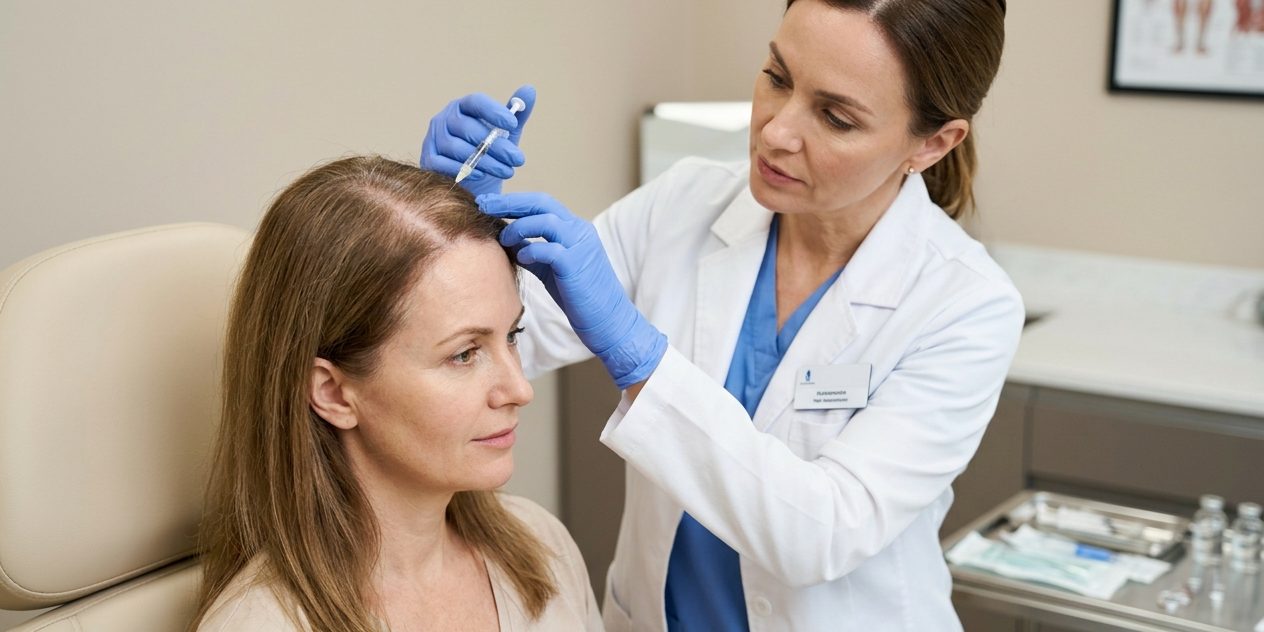
Understanding Stem Cell Therapy for Hair Loss: What It Is and How It Works
Stem cell therapy hair treatments represent a regenerative medicine approach that aims to reactivate dormant hair follicles and stimulate new growth. Unlike traditional hair transplants that relocate existing follicles, stem cell therapies work at the cellular level to regenerate hair where follicles have become inactive.
The Science Behind Stem Cells and Hair Growth
Hair follicles contain multiple stem cell populations essential for the natural hair growth cycle. These cells reside in specific areas of the follicle—particularly the bulge region and dermal papilla—where they regulate the transition between growth (anagen), regression (catagen), and resting (telogen) phases.
A groundbreaking February 2025 study from the University of Virginia, published in the Journal of Clinical Investigation, identified a previously overlooked KROX20+ stem cell population in the upper and middle hair follicle. Critically, researchers found these cells remain present even in bald scalp, suggesting that pattern hair loss may theoretically be reversible through targeted stem cell activation.
This discovery validates the biological premise that stem cell therapy for hair could work—but laboratory potential differs fundamentally from clinical reality.
How Stem Cell Hair Therapy Differs From Traditional Transplants
Traditional hair transplantation involves surgically removing follicular units from donor areas (typically the back of the head) and implanting them into thinning or bald areas. This proven technique redistributes existing hair but doesn’t create new follicles.
Stem cell hair therapy, by contrast, aims to:
- Reactivate dormant existing follicles without surgical extraction
- Stimulate follicle stem cells to produce thicker, healthier hair
- Potentially regenerate miniaturized follicles affected by androgenetic alopecia
- Provide a less invasive alternative to surgical transplantation
However, a critical limitation rarely emphasized in marketing: stem cell therapy works on dormant but viable follicles—it cannot create entirely new follicle structures from scratch in completely bald areas.
Types of Stem Cell Hair Treatments Currently Available
The stem cell therapy hair landscape includes several distinct approaches, each with different source materials, mechanisms, and evidence levels. Understanding these differences is essential for evaluating clinical offerings.
Adipose-Derived Stem Cells (ADSCs)
Adipose-derived stem cells represent the most clinically studied approach currently offered outside FDA-approved protocols. This procedure involves:
- Liposuction extraction: Fat tissue harvested from the patient’s abdomen or hip under local anesthesia
- Laboratory processing: Stem cells isolated from adipose tissue through centrifugation and enzymatic treatment
- Scalp injection: Processed stem cells injected into areas of thinning or hair loss
A 2017 Italian study using Rigenera technology demonstrated a 29% increase in hair density 23 weeks post-treatment. South Korean research published in 2020 showed a 28.1% improvement in hair density after 16 weeks. These measurable results appear promising, but they remain experimental findings without FDA validation.
Procedures typically require 3 to 5 sessions with costs ranging from $15,000 to $30,000 per treatment—potentially totaling $75,000 to $150,000 for a complete course.
Follicular Stem Cell Activation
This approach extracts a small scalp tissue sample via punch biopsy, processes it to isolate follicular stem cells, and reintroduces these cells into thinning areas. The procedure involves:
- Minimal tissue extraction using a circular blade device
- Enzymatic treatment with collagenase to break down tissue structure
- Centrifugation and microscopy to identify and separate stem cells
- Injection of stem cell suspension fluid back into the scalp
This method theoretically allows hair growth both where follicles were extracted and where they’re transplanted, effectively multiplying follicles rather than simply relocating them.
Bone Marrow-Derived Stem Cells
Less commonly used due to more invasive extraction procedures, bone marrow-derived mesenchymal stem cells (BM-MSCs) have shown regenerative potential in research settings. However, the discomfort and complexity of bone marrow aspiration make this approach less practical for hair restoration compared to adipose-derived alternatives.
Umbilical and Amniotic Stem Cell Products
Many clinics market “stem cell injections” sourced from umbilical cord blood or amniotic tissue. Critical reality: these products often contain no live stem cells—only cellular debris, proteins, or growth factors unlikely to produce genuine regenerative effects. The FDA has issued multiple warning letters to clinics making unsubstantiated claims about these products.
FDA Status and Regulatory Framework for Stem Cell Hair Treatments
Understanding the regulatory landscape is essential for patients navigating stem cell therapy hair offerings. The stark reality: as of 2026, zero FDA-approved stem cell treatments for hair loss exist.
Current FDA Approval Status
The FDA has approved only two medications for androgenetic alopecia:
- Minoxidil (topical and oral formulations)
- Finasteride (oral, for male pattern baldness)
Additionally, low-level laser therapy (LLLT) devices have received FDA clearance for hair growth. Surgical hair restoration procedures—follicular unit extraction (FUE) and follicular unit transplantation (FUT)—are well-established with decades of documented outcomes.
All stem cell hair therapies currently offered fall into investigational or experimental categories, operating under regulatory gray areas that allow autologous (patient’s own) cell procedures with minimal FDA oversight.
FDA Warning on Unapproved Stem Cell Therapies
In 2017, the FDA issued explicit warnings about unapproved stem cell therapies, advising patients to choose only:
- FDA-approved clinical applications (such as blood disorders treated with hematopoietic stem cells)
- Treatments studied under an Investigational New Drug Application (IND) with FDA authorization
The warning specifically addresses the proliferation of clinics offering unproven stem cell treatments for various conditions, including hair loss, without proper regulatory oversight or safety monitoring.
Distinguishing Legitimate Clinical Trials From Commercial Offerings
Patients can identify legitimate stem cell research through specific markers:
| Legitimate Clinical Trial | Unregulated Commercial Offering |
|---|---|
| FDA Investigational New Drug (IND) approval | No FDA oversight or registration |
| Institutional Review Board (IRB) supervision | No independent safety monitoring |
| ClinicalTrials.gov registration | No public clinical trial registration |
| Formal informed consent protocols | May provide minimal safety information |
| Peer-reviewed publication of results | Relies on testimonials and marketing claims |
Organizations like Utah Stem Cells provide educational resources to help patients understand the difference between evidence-based stem cell applications and unproven commercial offerings.
Clinical Evidence: Does Stem Cell Therapy for Hair Actually Work?
Evaluating stem cell therapy hair effectiveness requires examining peer-reviewed research separately from clinic marketing claims. The evidence presents a nuanced picture.
Published Research Studies and Results
Multiple studies demonstrate measurable improvements in specific contexts:
Italian Research (2017): Using Rigenera Activa technology with autologous micrografts, researchers documented a 29% ± 5% increase in hair density at 23 weeks post-treatment in patients with androgenetic alopecia. The study involved minimal invasive extraction and same-day reinjection.
South Korean Study (2020): This research showed a 28.1% increase in hair density after 16 weeks in participants receiving adipose-derived stem cell injections. Patients reported improved hair thickness and coverage.
Multiple Small Studies: Various research teams have reported density increases of 14.93 hairs/cm² and improvements in hair thickness ranging from 24% to 34% using different stem cell protocols.
Effectiveness by Hair Loss Type
Evidence suggests differential effectiveness depending on hair loss etiology:
Androgenetic Alopecia (Male and Female Pattern Baldness): Shows the most consistent improvements in clinical studies. The hormonal miniaturization of follicles in androgenetic alopecia creates dormant but viable follicles that may respond to stem cell activation.
Alopecia Areata: Limited evidence exists for autoimmune hair loss conditions. Some research suggests stem cells may modulate immune responses, but results are less predictable than with androgenetic alopecia.
Scarring Alopecia: Conditions that destroy follicle structures (cicatricial alopecia) show minimal to no response to stem cell therapy, as the target follicular structures no longer exist.
Critical Limitations of Current Evidence
Despite promising results, significant evidence gaps remain:
- Small sample sizes: Most studies involve 20 to 50 participants, insufficient for definitive conclusions
- Short follow-up periods: Studies typically track results for 16 to 23 weeks; long-term durability remains unknown
- Protocol variability: Different extraction methods, processing techniques, and injection protocols make comparison difficult
- Lack of standardization: No consensus exists on optimal cell concentration, injection frequency, or treatment intervals
- Publication bias: Positive results are more likely to be published than negative findings
Importantly, none of these studies have undergone the rigorous Phase 3 clinical trial process required for FDA approval.
Candidacy Limitations Clinics Often Omit
The most critical factor determining stem cell therapy hair effectiveness: follicle viability. Stem cell treatments work best for:
- Early-stage hair loss: Norwood 2-4 for men, Ludwig 1-2 for women
- Recent thinning: Areas with visible miniaturization but not complete baldness
- Diffuse thinning: Patterns suggesting dormant rather than destroyed follicles
Patients with advanced baldness (Norwood 6-7) or completely bald areas with no remaining follicle structures are unlikely to benefit. Stem cells cannot create new follicles from scratch—they can only reactivate existing dormant structures.
This candidacy limitation is frequently obscured in clinic marketing, leading patients with advanced hair loss to spend tens of thousands of dollars on treatments unlikely to produce results.
Promising Clinical Trials: What to Watch in 2026-2028
While no FDA-approved stem cell therapy for hair currently exists, several legitimate clinical trials show genuine promise and deserve patient attention.
PP405 from Pelage Pharmaceuticals
PP405 represents the most advanced stem cell-targeted hair loss treatment in development. This topical small molecule targets hair follicle stem cell reactivation through a metabolic pathway involving lactate and lactate dehydrogenase (LDH).
Phase 2a results: 31% of male participants achieved 20% or greater increase in hair density. The treatment showed consistent results across multiple assessment methods.
Current status: PP405 entered Phase 3 clinical trials in 2026 after Pelage Pharmaceuticals raised $120 million in late 2025. Time magazine named PP405 one of the best inventions of 2025.
Realistic timeline: If Phase 3 trials succeed, potential FDA approval could occur in the 2028-2030 window.
Unlike many investigational offerings, PP405 operates under full FDA oversight with proper IND authorization and ClinicalTrials.gov registration (NCT identifier available for verification).
ET-02 from Eirion Therapeutics
ET-02 takes a different approach, designed to correct defective hair follicle stem cells at the cellular level. This therapy addresses the underlying stem cell dysfunction that contributes to pattern hair loss.
Phase 1 trial results: Participants experienced encouraging rapid hair growth and reduced graying without serious adverse effects. The treatment demonstrated acceptable safety profiles necessary for advancement.
Current status: ET-02 is progressing toward Phase 2 trials with expanded participant populations and longer observation periods.
Realistic timeline: FDA approval, if trials continue successfully, would likely occur around 2029 or later.
How Patients Can Participate in Legitimate Trials
Patients interested in stem cell therapy hair treatments can explore legitimate research opportunities through:
- ClinicalTrials.gov: The authoritative U.S. database of federally and privately supported clinical studies
- Search strategy: Use terms like “alopecia,” “hair loss,” and “stem cell” with filters for “recruiting” status
- Institution websites: Major research universities often advertise clinical trial opportunities
- Dermatology departments: Academic medical centers conducting hair loss research
Critical distinction: Legitimate clinical trials never charge participants for experimental treatments. Any “trial” requiring payment is not operating under proper FDA oversight.
Stem Cell Hair Treatment Procedure: What to Expect
Understanding the actual stem cell therapy hair procedure helps patients evaluate clinic offerings and set realistic expectations.
Pre-Treatment Assessment
Legitimate protocols begin with comprehensive evaluation:
- Medical history review: Identifying contraindications and underlying causes of hair loss
- Scalp examination: Determining hair loss pattern and follicle viability
- Trichoscopy or dermoscopy: Magnified scalp analysis to assess miniaturization
- Photography: Baseline documentation for objective comparison
- Blood work: Ruling out nutritional deficiencies, thyroid disorders, or other medical causes
Adipose-Derived Stem Cell Procedure
For ADSC treatments, the most common investigational protocol involves:
Step 1: Fat Tissue Extraction (60-90 minutes)
- Local anesthesia administered to abdomen or hip area
- Small-volume liposuction performed to harvest adipose tissue
- Typically 50-100 mL of fat tissue collected
Step 2: Laboratory Processing (90-120 minutes)
- Adipose tissue undergoes enzymatic digestion to release cells
- Centrifugation separates stem cells from other tissue components
- Cell counting and viability testing performed
- Stem cells suspended in appropriate medium for injection
Step 3: Scalp Injection (30-45 minutes)
- Scalp area cleansed and prepared
- Local anesthetic applied to minimize discomfort
- Multiple small injections distributed across thinning areas
- Typical injection depth: dermis and subcutaneous tissue
Total procedure time: approximately 3 to 4 hours for same-day processing and treatment.
Punch Biopsy Follicular Stem Cell Procedure
An alternative approach using scalp tissue directly:
- Tissue extraction: Circular blade device removes small cylindrical scalp samples (3-4 mm diameter)
- Enzymatic treatment: Collagenase breaks down tissue structure to release follicular cells
- Cell separation: Centrifugation and microscopy identify stem cell populations
- Reinjection: Processed cells injected into treatment areas
This method involves less invasive extraction than liposuction but may yield lower stem cell quantities.
Post-Treatment Protocol and Recovery
Following stem cell therapy hair treatment, patients typically experience:
Immediate post-procedure (24-48 hours):
- Mild to moderate scalp tenderness at injection sites
- Minor swelling or redness
- Temporary numbness from local anesthesia
- If liposuction performed: discomfort at fat extraction site
First week:
- Avoid strenuous exercise or activities that increase scalp blood flow
- Gentle hair washing permitted after 24-48 hours
- Pain typically subsides within 5-7 days
- Avoid alcohol, smoking, and blood-thinning medications
Recovery timeline:
- No significant downtime: Most patients return to normal activities within 1-2 days
- Driving restrictions: Cannot drive immediately post-procedure due to local anesthesia effects
- Scarring: Minimal at scalp injection sites; potential small scars at liposuction site
Expected Timeline for Results
Realistic expectations for stem cell therapy hair growth:
- 0-8 weeks: No visible changes; cellular activation occurring at follicle level
- 8-16 weeks: Initial improvements may become visible in hair thickness or density
- 16-24 weeks: More pronounced changes in hair quality and coverage
- 24+ weeks: Maximum benefit typically achieved by 6 months
Most protocols recommend multiple treatment sessions (3-5 over 6-12 months) for optimal results, significantly increasing total cost.
Side Effects, Risks, and Safety Considerations
While marketed as minimally invasive, stem cell therapy hair treatments carry real risks that patients must understand before proceeding.
Common Side Effects
Frequently reported adverse effects include:
- Injection site pain: Mild to moderate discomfort lasting 3-7 days
- Scalp swelling: Temporary edema at treatment areas
- Bruising: Minor ecchymosis around injection sites
- Temporary shedding: Paradoxical hair loss in first 2-4 weeks (shock loss)
- Scalp tenderness: Sensitivity persisting several weeks
- Liposuction site discomfort: If ADSCs used, pain at fat extraction site
Serious Potential Complications
Less common but more serious risks include:
Infection risk: Any procedure breaching skin integrity creates infection potential. Proper sterile technique is essential, but risk cannot be eliminated entirely.
Bleeding complications: Scalp vascularity increases bleeding risk, particularly for patients on anticoagulants or with clotting disorders.
Nerve damage: Punch biopsy or deep injections risk injury to superficial nerves, potentially causing temporary or permanent numbness or altered sensation.
Scarring: While typically minimal, hypertrophic scarring or keloid formation can occur, particularly at liposuction sites.
Allergic reactions: Processing agents, anesthetics, or suspended mediums may trigger allergic responses.
Vascular complications: Accidental injection into blood vessels could theoretically cause embolism or other vascular events.
Long-Term Safety Unknown
A critical safety consideration: long-term effects remain unstudied. Concerns include:
- Tumorigenic potential: While autologous stem cells pose lower cancer risk than embryonic stem cells, long-term effects of repeated stem cell manipulations are unknown
- Uncontrolled cell growth: Theoretical risk of unregulated cellular proliferation
- Immune responses: Potential for delayed autoimmune reactions
- Unknown durability: Whether results persist beyond 2-3 years is undocumented
Special Population Risks
Certain patients face elevated risks:
- Cancer history: Patients with previous malignancies should exercise extreme caution
- Autoimmune conditions: Stem cell manipulation may trigger disease flares
- Immunosuppressed patients: Increased infection risk
- Bleeding disorders: Contraindication for invasive extraction procedures
- Active scalp conditions: Psoriasis, seborrheic dermatitis, or infections should be controlled before treatment
The Contamination Risk in Unregulated Settings
A significant safety concern with clinics operating outside FDA oversight: inadequate laboratory standards. Cell processing requires sterile techniques and quality control that may not exist in non-regulated settings. Contamination with bacteria, fungi, or endotoxins could cause serious infections or inflammatory reactions.
Proven Alternatives to Stem Cell Hair Therapy
Patients considering stem cell therapy for hair should understand evidence-based alternatives with stronger safety profiles and cost-effectiveness.
FDA-Approved Medical Treatments
Minoxidil (Rogaine)
- Mechanism: Potassium channel opener that extends anagen phase and increases blood flow
- Evidence: Decades of clinical use with proven efficacy
- Application: Topical 5% solution or foam applied twice daily; oral formulation available
- Results: 40-60% of users experience visible improvement
- Cost: $15-$30 monthly for generic topical formulations
- Considerations: Requires continuous use; discontinuation leads to reversal
Finasteride (Propecia) and Dutasteride
- Mechanism: 5-alpha reductase inhibitors that reduce DHT (dihydrotestosterone), the hormone causing follicle miniaturization
- Evidence: High-quality clinical trials demonstrating effectiveness in 80-90% of men
- Application: Oral tablet (finasteride 1mg daily; dutasteride 0.5mg daily)
- Results: Slows hair loss in nearly all users; regrowth in 50-60%
- Cost: $20-$50 monthly for generic finasteride
- Considerations: Male-only FDA approval; potential sexual side effects in 1-2% of users
Platelet-Rich Plasma (PRP) Therapy
PRP hair treatment represents a more established regenerative approach than stem cell therapy:
Procedure: Blood drawn from patient, centrifuged to concentrate platelets, then injected into scalp. The concentrated growth factors stimulate follicle activity.
Evidence base: A 2025 systematic review and meta-analysis of 43 clinical studies concluded PRP represents a generally safe and effective therapeutic option for alopecia, with consistent increases in hair density.
Advantages over stem cell therapy:
- Simpler procedure without tissue extraction
- More extensive research documentation
- Shorter procedure time (45-60 minutes)
- Well-established safety profile
Limitations: Not FDA-approved; requires multiple sessions; individual response variability
Surgical Hair Restoration
Follicular Unit Extraction (FUE) and Follicular Unit Transplantation (FUT) remain the gold standard for permanent hair restoration:
FUE procedure:
- Individual follicular units extracted from donor area
- Recipient sites created in thinning/bald areas
- Extracted grafts implanted into recipient sites
- Permanent results using patient’s own genetically resistant hair
Advantages:
- Proven effectiveness: 90-95% graft survival rates
- Permanent results: Transplanted hair grows for lifetime
- Natural appearance: When performed skillfully, results are undetectable
- One-time cost: Single procedure rather than ongoing treatments
- Decades of refinement: Technique continuously improved since 1990s
Limitations:
- Requires sufficient donor hair availability
- Higher upfront cost ($8,000-$15,000)
- Surgical procedure with associated risks
- Recovery time of 7-14 days
Low-Level Laser Therapy (LLLT)
FDA-cleared laser devices use red light wavelengths to stimulate follicles:
- Mechanism: Photobiomodulation increases cellular ATP production and follicle metabolism
- Evidence: Multiple controlled trials showing modest improvements in hair density and thickness
- Application: In-office treatments or home devices (caps, combs, helmets)
- Advantages: Non-invasive, painless, no side effects, convenient home use
- Limitations: Modest results; requires consistent long-term use
Combination Therapy Approach
The most effective hair restoration strategy often combines multiple evidence-based treatments:
- Medical foundation: Finasteride + minoxidil to halt progression and stimulate regrowth
- Adjunctive PRP: Quarterly treatments to enhance medical therapy effectiveness
- Surgical restoration: FUE for areas of permanent hair loss
- Maintenance: Continued medical therapy to preserve both native and transplanted hair
This comprehensive approach costs less than investigational stem cell therapy while providing proven results at each intervention level.
How to Evaluate Stem Cell Hair Loss Clinics
Patients considering stem cell therapy hair treatments must carefully evaluate clinic credentials and claims. This framework identifies red flags and legitimate markers.
Red Flags Indicating Fraudulent or Misleading Offerings
Guarantee claims: Any clinic guaranteeing specific results or success rates is misrepresenting the experimental nature of stem cell hair therapy. Legitimate providers acknowledge uncertainty.
FDA-approval claims: Statements like “FDA-approved stem cell treatment” for hair loss are false. No such approval exists as of 2026.
Before/after photos without context: Images without standardized lighting, hair length consistency, or independent verification can be misleading or fabricated.
“Cure” language: Hair loss is a chronic progressive condition. No treatment “cures” androgenetic alopecia; at best, treatments slow progression or stimulate regrowth.
Pressure tactics: Limited-time offers, aggressive sales techniques, or pressure to commit immediately suggest commercial rather than medical motivation.
Vague methodology: Inability or unwillingness to explain exactly what cells are used, how they’re processed, and what concentration is injected indicates questionable practices.
Exaggerated science: Claims about “revolutionary” or “breakthrough” treatments without peer-reviewed publications or clinical trial registration.
Celebrity endorsements without clinical data: Testimonials from athletes or entertainers do not substitute for scientific evidence.
Markers of Legitimate Providers
Trustworthy stem cell hair therapy providers demonstrate:
Transparent limitations: Openly discuss experimental status, lack of FDA approval, and evidence gaps
Detailed informed consent: Comprehensive documentation of risks, uncertain outcomes, and alternative options
Clinical trial participation: Active involvement in registered studies with IRB oversight
Board-certified physicians: Dermatologists or plastic surgeons with hair restoration specialization
Published research: Contributions to peer-reviewed medical literature
Professional affiliations: Membership in International Society of Hair Restoration Surgery (ISHRS) or similar organizations
Realistic expectations: Clear communication about modest results, multiple treatments required, and individual variability
Comprehensive evaluation: Thorough assessment including blood work, scalp analysis, and discussion of proven alternatives before recommending expensive investigational therapy
Questions to Ask Before Treatment
Patients should obtain clear answers to these essential questions:
- What specific type of stem cells will be used? (Adipose, follicular, umbilical, bone marrow?)
- How are the stem cells obtained and processed? (Detailed protocol explanation)
- What is the stem cell concentration in the injection? (Specific cell count per milliliter)
- Is this treatment part of an FDA-registered clinical trial? (ClinicalTrials.gov NCT number)
- What published research supports this specific protocol? (Peer-reviewed citations)
- What is the expected success rate? (With data supporting the estimate)
- How many treatments will be required? (Total cost projection)
- What are all potential side effects and complications? (Comprehensive risk disclosure)
- What is your refund or guarantee policy? (Typically none exists)
- Why is this preferable to FDA-approved treatments or hair transplant? (Comparative benefit explanation)
- Can you provide patient references who achieved results? (Verifiable testimonials)
- What is your medical background and training in stem cell therapy? (Credentials verification)
Evasive, vague, or irritated responses to these questions indicate the provider may not be operating with appropriate transparency and patient-centered care.
Verifying Credentials and Claims
Patients can independently verify provider credentials:
- Medical license: State medical board websites confirm active, unrestricted licenses
- Board certification: American Board of Dermatology or American Board of Plastic Surgery verification
- Clinical trial registration: ClinicalTrials.gov search confirms legitimate research participation
- Publication record: PubMed search reveals peer-reviewed research contributions
- FDA warning letters: Search FDA enforcement database for actions against the clinic or physician
- State medical board complaints: Public records may reveal disciplinary actions
- Professional organization membership: ISHRS or American Academy of Dermatology directories
The Future of Stem Cell Hair Restoration: Realistic Timeline
Understanding the genuine trajectory of stem cell therapy hair development helps patients decide whether to wait for proven treatments or pursue current investigational options.
Near-Term (2026-2028)
PP405 Phase 3 trials: Completion of large-scale studies will determine whether this topical stem cell activator achieves FDA approval. Results expected by late 2027 or early 2028.
ET-02 Phase 2 advancement: Expanded clinical trials with larger participant populations and longer observation periods.
Improved understanding of follicle stem cell populations: The KROX20+ stem cell discovery and similar research will refine targeting strategies.
Standardization of protocols: Academic research may establish consensus on optimal cell types, concentrations, and injection techniques.
Regulatory clarification: FDA may issue additional guidance distinguishing legitimate autologous cell procedures from fraudulent claims.
Mid-Term (2028-2032)
First FDA approvals possible: If Phase 3 trials succeed, PP405 or similar treatments could receive approval in the 2028-2030 window.
Insurance coverage consideration: Once FDA-approved, treatments may become eligible for coverage under specific medical conditions.
Pricing stabilization: Market competition and standardization could reduce costs from current $15,000-$30,000 levels.
Long-term safety data: Five to ten-year follow-up studies will clarify durability and potential delayed complications.
Combination protocols: Integration of stem cell approaches with proven medical and surgical treatments.
Long-Term (2032+)
Hair follicle neogenesis: True creation of entirely new follicles from stem cells—currently theoretical—may become technically feasible.
Gene therapy integration: Combining stem cell delivery with genetic modification to create permanent androgenetic alopecia resistance.
3D bioprinting: Laboratory-grown follicular structures implanted into scalp.
Personalized stem cell therapies: Genetic profiling to predict individual response and customize treatment protocols.
What Patients Should Do Now
Given this realistic timeline, recommended strategies include:
For early-stage hair loss (Norwood 2-3, Ludwig 1):
- Begin FDA-approved medical therapy (finasteride/minoxidil) immediately
- Consider PRP as adjunctive treatment
- Monitor clinical trial progress for future participation
- Preserve hair transplant candidacy by maintaining donor area
For moderate hair loss (Norwood 4-5, Ludwig 2-3):
- Maximize medical therapy effectiveness
- Consider hair transplant for permanent restoration of critical areas
- Use medical therapy to protect remaining native hair
- Monitor for FDA-approved stem cell treatments in 2028-2030 timeframe
For advanced hair loss (Norwood 6-7):
- Focus on proven surgical options (FUE/FUT) where donor supply permits
- Understand stem cell therapy is unlikely to benefit areas with no remaining follicles
- Avoid spending tens of thousands on investigational treatments with low probability of success
- Consider scalp micropigmentation or hairpiece solutions for areas beyond transplant feasibility
For all patients considering investigational stem cell therapy:
- Understand you are paying premium prices for unproven treatments
- Recognize results are uncertain and non-refundable
- Ensure treatment is performed by board-certified physician with proper oversight
- Verify exactly what type of cells are being used and how they’re processed
- Consider whether waiting 2-4 years for FDA-approved options is more prudent
Conclusion: Making an Informed Decision About Stem Cell Hair Therapy
The landscape of stem cell therapy hair restoration in 2026 presents a complex picture of genuine scientific promise alongside significant commercial exploitation. Understanding this distinction protects patients from financial loss and potential physical harm while allowing appropriate consideration of legitimate opportunities.
Key Takeaways
The science is real but not yet ready: Hair follicles genuinely contain targetable stem cell populations, and early research shows measurable improvements in hair density. However, no stem cell treatment for hair loss has achieved FDA approval or demonstrated long-term safety and efficacy through rigorous Phase 3 trials.
Most current offerings are investigational at best, fraudulent at worst: The $280 million market includes legitimate research, marginal experimental offerings, and outright fraud. Patients cannot rely on marketing claims to distinguish these categories.
Cost dramatically exceeds proven alternatives: Spending $15,000-$150,000 on unproven stem cell therapy rarely makes financial sense when FDA-approved medications cost under $500 annually and proven hair transplants cost $8,000-$15,000 one time.
Candidacy limitations are frequently obscured: Stem cell therapy works best for early-stage hair loss with dormant follicles still present. Patients with advanced baldness and no remaining follicular structures will not benefit, regardless of marketing promises.
Promising treatments are 2-4 years away: PP405 and similar developments in legitimate clinical trials may achieve FDA approval in the 2028-2030 timeframe, offering safer and more affordable options than current unregulated offerings.
Who Might Reasonably Consider Current Stem Cell Therapy
Investigational stem cell hair treatments may be reasonable for a narrow patient population:
- Early-stage hair loss (Norwood 2-4, Ludwig 1-2) with visible miniaturization but not complete baldness
- Financial resources sufficient that $20,000-$50,000 represents acceptable loss if treatment fails
- Medical contraindications to finasteride or other proven treatments
- Realistic expectations understanding results are uncertain and experimental
- Access to legitimate providers with proper medical oversight and transparent protocols
- Participation in registered clinical trials where treatment cost is covered and proper safety monitoring exists
Who Should Avoid Current Stem Cell Offerings
Stem cell therapy is not appropriate for:
- Patients with advanced hair loss and no remaining follicles in treatment areas
- Those unable to afford the substantial cost without financial hardship
- Patients who have not yet tried FDA-approved medical treatments
- Anyone being pressured by aggressive sales tactics or guarantee claims
- Patients with cancer history or significant health conditions increasing risk
- Those seeking treatments from clinics unable to provide transparent methodology
The Recommended Approach for Most Patients
The optimal strategy for most people experiencing hair loss:
- Begin proven medical therapy immediately: Finasteride and/or minoxidil to halt progression
- Consider PRP as adjunctive treatment: More evidence and lower cost than stem cell therapy
- Monitor legitimate clinical trial progress: Stay informed about PP405 and other FDA-supervised research
- Preserve candidacy for future treatments: Medical therapy maintains hair that may benefit from future stem cell advances
- Consider surgical restoration for priority areas: Proven permanent results for hairline and crown
- Reassess in 2028-2030: When FDA-approved stem cell treatments may become available
This approach maximizes current results with proven treatments while remaining positioned to benefit from stem cell advances once they achieve regulatory approval and evidence-based validation.
Final Perspective
Stem cell therapy for hair loss represents an exciting frontier in regenerative medicine with genuine scientific foundation. The KROX20+ stem cell discovery, PP405’s progression to Phase 3 trials, and accumulating evidence from adipose-derived stem cell research all support continued optimism about future possibilities.
However, optimism about future potential should not be confused with confidence in current commercial offerings. The absence of FDA approval, limited long-term safety data, high costs, frequent misrepresentation, and availability of proven alternatives all argue for caution regarding most stem cell hair treatments available in 2026.
Patients deserve treatments that are safe, effective, and affordable. Until stem cell hair therapy achieves those standards through proper regulatory pathways, most individuals experiencing hair loss will achieve better outcomes by investing in evidence-based approaches that have already demonstrated their value through decades of clinical use and rigorous scientific validation.
The future of hair restoration likely includes stem cell therapies—but that future is not quite here yet. Patience, combined with smart use of current proven treatments, offers the best path forward for most patients navigating the complex landscape of hair loss solutions in 2026.


