
Stem Cell Hair Restoration: Does It Actually Work
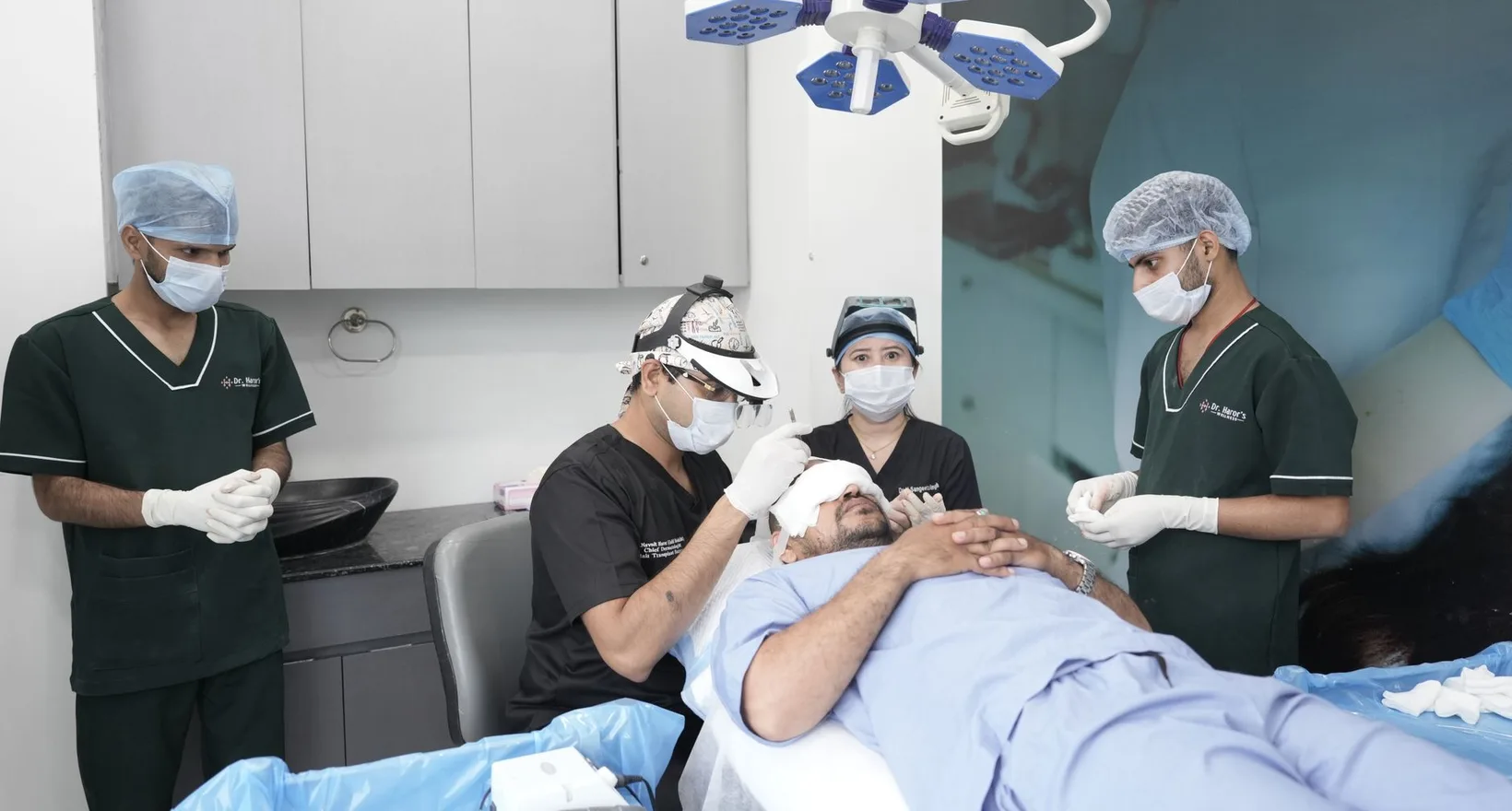
If you’ve been researching options for thinning hair, you’ve probably come across bold claims about stem cell hair restoration — before-and-after photos, testimonials, and promises of thicker hair without surgery. It’s a reasonable thing to be curious about, and also a reasonable thing to be skeptical of. So what does the actual research say, and where does it fit alongside more established options like PRP? Here’s an honest, evidence-informed look.
What “stem cell hair restoration” actually means
The term gets used loosely in marketing, which makes it confusing. In the research literature, “stem cell” approaches to hair loss generally fall into a few categories:
- Adipose-derived cells or cell-conditioned extracts, often taken from a patient’s own fat tissue and processed in a lab
- Hair follicle-derived cells, isolated from a small scalp biopsy
- Stem cell-derived growth factors, exosomes, or conditioned media, which don’t contain living cells but carry the signaling molecules those cells release
- Donated (allogeneic) umbilical cord or amniotic tissue, prepared from screened donor tissue rather than taken from the patient’s own body
This distinction matters. At Utah Stem Cells, when a regenerative component is used alongside PRP hair restoration, it comes from donated umbilical cord or amniotic tissue — not from a patient’s own fat or bone marrow. If you want to understand why that sourcing choice matters for safety and consistency, our article on why we use donated tissue and not your own goes into more detail. The PRP component, by contrast, is always autologous — prepared from your own blood.
How these approaches are thought to work
Hair follicles cycle through growth and dormant phases, and thinning often happens when more follicles sit dormant or shrink (miniaturize) than usual. Regenerative approaches are generally designed to support follicles that are still present but underactive, rather than to create entirely new ones.
The proposed mechanism involves paracrine signaling: growth factors, cytokines, and other bioactive molecules released by cells (or present in donor tissue preparations) that may help nourish the scalp environment and support follicles that are still viable. Lab research has pointed to signaling pathways like Wnt and JAK-STAT as relevant to activating follicle activity, and some studies describe effects on local blood supply (angiogenesis) around follicles.
It’s worth being direct about where the science stands: these are plausible, actively studied mechanisms — not settled facts about what happens in every patient’s scalp.
What the evidence actually shows
This is the part that matters most, and where a lot of marketing gets ahead of the research.
A frequently cited literature review on stem cell applications for hair growth describes the field as being “in its infancy.” One of the more commonly referenced small studies found that roughly 29% of patients showed increased hair density after an adipose-derived cell injection — a modest signal from a very small sample, not a large controlled trial. A 2025 review covering research through early 2024 similarly found that adipose-derived stem cell-conditioned extracts had the most consistent preclinical and clinical support among the approaches studied, while induced pluripotent stem cell methods and plant-derived extracellular vesicles remain experimental.
Across the literature, a few patterns show up consistently:
- Study sizes are small, often a few dozen patients or fewer.
- There’s no standardized protocol — preparation methods, dosing, and injection intervals vary from study to study.
- Long-term durability is largely unknown. Most studies report outcomes over months, not years.
- Head-to-head comparisons are rare. Few studies directly compare stem cell approaches against PRP, minoxidil, or finasteride under the same conditions.
By contrast, PRP for hair restoration has a larger and more consistent body of clinical evidence behind it, which is one reason it’s often used as a first-line regenerative option rather than stem cells alone. For a closer look at that evidence, see does PRP really regrow hair and our comparison of PRP versus exosomes for hair loss.
No stem cell treatment for hair loss is FDA-approved. That’s true of the regenerative field broadly — our article on whether stem cell therapy is FDA-approved explains what that does and doesn’t mean for patients. It doesn’t mean a treatment is unsafe or without merit; it means the evidence hasn’t yet met the bar required for that specific regulatory status, and results should be viewed with appropriately calibrated expectations.
Stem cells vs. PRP vs. other options
| Approach | Source | Evidence base | Notes |
|---|---|---|---|
| PRP | Your own blood (autologous) | Larger, more consistent clinical evidence | Often first-line for thinning hair |
| Donor-tissue regenerative component | Donated umbilical/amniotic tissue (allogeneic) | Early-stage, growing | Sometimes added alongside PRP |
| Adipose-derived stem cells | Patient’s own fat, lab-processed | Small studies, promising but preliminary | Not offered as an autologous procedure here |
| Minoxidil / finasteride | Pharmaceutical | Established, FDA-approved | Often used alongside regenerative options |
No single option is right for everyone, and a physician evaluation — not a marketing claim — should determine which combination, if any, makes sense for your pattern of hair loss. Our article on whether stem cells can really reverse hair loss walks through this comparison in more depth, and this patient-facing guide to what actually works and is safe is a useful next read.
Who tends to be a reasonable candidate
Based on how the research is trending, people most likely to be reasonable candidates for a regenerative approach to hair loss generally:
- Are in the earlier stages of thinning, with follicles still present but underactive, rather than areas of long-standing baldness
- Have realistic expectations about gradual, partial improvement rather than a full head of new hair
- Are not expecting a one-time fix — most regenerative protocols involve a series of sessions over time
- Have ruled out underlying medical causes of hair loss (thyroid issues, iron deficiency, hormonal shifts) that may need separate treatment
Candidacy is never a self-diagnosis. It’s determined by a physician after reviewing your hair and scalp, health history, and goals.
What to expect at Utah Stem Cells
At Utah Stem Cells, hair restoration is physician-supervised by Dr. William Cimikoski and built around honest expectation-setting rather than overselling the science. Evaluation starts with an in-person assessment of your pattern of thinning, a review of your health history, and a candid conversation about whether a regenerative approach — PRP alone, or PRP alongside a donor-tissue regenerative component — fits your situation. If you’re not a good candidate, that gets said plainly rather than glossed over. Those considering options because of hair loss tied to genetics, hormones, stress, or age can read our overview of before-and-after realities patients should know for a grounded sense of what a realistic timeline looks like.
Frequently asked questions
Does stem cell hair restoration actually regrow hair?
The honest answer is: for some patients, in some studies, there’s a measurable increase in hair density or thickness — but the evidence is still early-stage, based on small studies, and results vary considerably from person to person. No clinic can honestly promise guaranteed regrowth.
Is stem cell hair restoration FDA-approved?
No. Regenerative hair treatments, including stem cell-based approaches, are not FDA-approved for hair loss. That reflects the current state of the evidence rather than a judgment about whether the approach has any value.
What’s the difference between PRP and stem cell hair restoration?
PRP is prepared from your own blood and has a larger body of supporting evidence. A stem cell or regenerative component, when used, typically comes from donated umbilical cord or amniotic tissue at Utah Stem Cells — not from your own fat or bone marrow — and the supporting research is earlier-stage.
Are the stem cells used at Utah Stem Cells taken from my own body?
No. Any regenerative tissue component used alongside PRP comes from donated (allogeneic), laboratory-processed umbilical cord or amniotic tissue, not from liposuction, fat, or bone marrow taken from the patient.
How many sessions does it typically take to see a change?
Regenerative approaches work gradually, over a series of sessions spaced weeks apart, with changes typically assessed over several months. There is no reliable single-session fix, and timelines vary by patient.
Who is not a good candidate?
Patients with advanced, long-standing baldness where follicles are no longer present, or those expecting guaranteed, complete regrowth, are often not well suited to regenerative approaches. A physician evaluation is the only reliable way to know where you fall.
This article is for general education. It is not medical advice or a promise of any particular result. Stem cell hair restoration is not FDA-approved, and individual results vary. Candidacy for any treatment discussed here is determined by a physician after individual evaluation.