
Stem Cell Treatment for Hip Arthritis
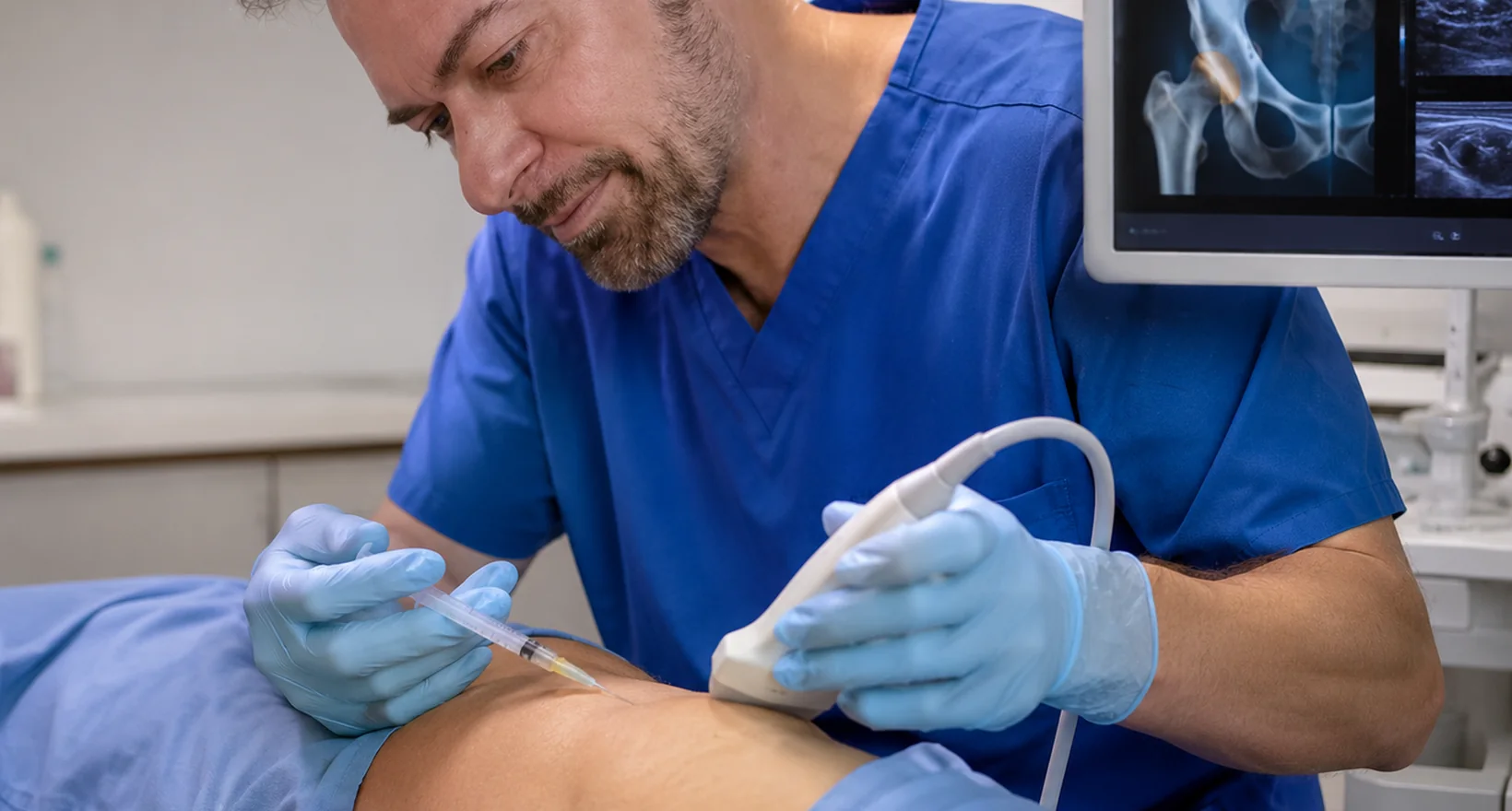
Hip arthritis has a way of narrowing your world one activity at a time — the stairs you take more slowly, the walk you cut short, the deep ache in the groin or hip that flares when you stand up. When it reaches this point, most people are told the same thing: manage it for now, and eventually consider a hip replacement. But if you’d rather not rush into major surgery, it’s worth understanding where stem cell treatment for hip arthritis fits in.
This guide explains what the treatment is, how it works, who it tends to help, and how honestly to weigh it against replacement.
What hip arthritis does to the joint
The hip is a ball-and-socket joint cushioned by smooth cartilage. With osteoarthritis, that cartilage gradually wears thin, so the joint no longer glides the way it should. The result is the familiar pattern of hip pain: stiffness after sitting, pain with walking or rotation, and a joint that feels like it’s grinding rather than gliding.
Because cartilage doesn’t repair itself well on its own, hip arthritis tends to be progressive — which is why symptoms usually build over time rather than fading.
The usual path — and why people look for alternatives
Early on, hip arthritis is typically managed with anti-inflammatories, activity changes, physical therapy and sometimes cortisone injections. These can help with symptoms, but they work mainly by calming pain, not by supporting the joint itself. When they stop being enough, the conversation often jumps to a total hip replacement.
Replacement can be the right answer for a severely damaged joint. But it’s major surgery with a meaningful recovery — so many people understandably want to know whether there’s a less invasive step to try first.
How stem cell treatment approaches hip arthritis
Stem cell treatment takes a regenerative angle: instead of only masking pain, the goal is to support the joint environment and your natural repair processes. Delivered as stem cell joint regeneration, it’s a physician-performed, in-office procedure designed to work with the hip you already have, rather than replacing it — with the aim of calming inflammation and easing pain so the joint moves more comfortably.
It’s worth being precise about where the cells come from, because clinics differ:
- The stem cells we use are derived from ethically donated umbilical cord and amniotic tissue, prepared in a laboratory — not harvested from your body. We do not use autologous (your-own) stem cells such as fat- or bone-marrow-derived cells.
- PRP (platelet-rich plasma) is drawn from a small sample of your own blood and often used alongside stem cells.
Stem cells, PRP, or both?
These are two different regenerative tools, and the right choice depends on your hip and your goals. Sometimes one is used, sometimes both together. We compare them in detail in PRP vs Stem Cells: Which Treatment Is Right for Your Joint Pain?, and you can learn more about the platelet side on our PRP joint treatment page. In some cases a different regenerative approach such as prolotherapy may also come up in the conversation.
Can it help you avoid hip replacement?
Here’s the honest answer: for some people, it may help delay or avoid surgery — and for others, it won’t. Regenerative treatment tends to be most worth considering for mild to moderate hip arthritis, where there’s still cartilage to work with and the goal is to reduce pain and stay active. For a severely degenerated, bone-on-bone hip, a replacement may still be the more appropriate path — and a good physician will tell you when that’s the case.
It’s the same principle we cover for other joints, like the knee in Stem Cells for Knee Pain: Can You Avoid Knee Replacement? and the shoulder in Shoulder Pain That Won’t Go Away? Regenerative Medicine May Help. If you’d like to look at the science, Stem Cell Research on Knee Osteoarthritis and Benefits Of Stem Cell Therapy For Knees explore the evidence in a closely related joint.
Who is a good candidate?
You may be a reasonable candidate if you:
- Have mild to moderate hip arthritis or ongoing joint pain
- Want to reduce pain and stay active without jumping straight to surgery
- Are in generally good health with realistic expectations
- Understand this supports comfort and function — it doesn’t grow a brand-new hip
You may not be a good fit if you have severe, end-stage arthritis, significant joint deformity, active infection, or certain other medical conditions — which is exactly what the evaluation is designed to determine.
What to expect at Utah Stem Cells
Every plan begins with a physician evaluation. Dr. William Cimikoski examines the hip, reviews your imaging and history, and confirms whether you’re a good candidate — or tells you honestly if you’re not. If you proceed, treatment is performed in-office, most patients return to everyday activities quickly, and improvement tends to develop gradually over the following weeks as your body responds.
The goal isn’t to sell you a procedure — it’s to help you decide, clearly and honestly, whether a non-surgical option is worth trying before you commit to the operating room.
Frequently asked questions
Can stem cells cure hip arthritis?
No. Stem cell treatment is not an FDA-approved cure for arthritis. The goal is to support the joint environment and help reduce pain and improve function. Results vary, and expectations should be set honestly by the physician.
Are the stem cells taken from my own body?
No. At Utah Stem Cells the stem cells come from ethically donated umbilical cord and amniotic tissue, prepared in a laboratory. Only PRP is drawn from you, from a small blood sample. We do not use fat- or bone-marrow-derived (autologous) stem cells.
Could it help me avoid a hip replacement?
For some patients with mild to moderate hip arthritis, it may reduce pain and improve function enough to delay or avoid surgery. It is not guaranteed, and severe bone-on-bone hips may still need replacement. A physician evaluation is the only way to know.
Is the procedure painful, and is there downtime?
It’s a minimally invasive, in-office procedure that most patients tolerate well, with little to no downtime. Your provider explains exactly what to expect and how to care for the hip afterward.
How do I find out if I’m a candidate?
Book a no-pressure consultation. We’ll review your imaging and history, examine the hip, and give you an honest recommendation — including whether surgery would actually serve you better.
This article is for general education. It is not medical advice and is not a promise of any particular result. Stem cell therapy is not an FDA-approved cure for arthritis, and treatment suitability is determined by the physician based on individual evaluation.